Tuesday, April 3, 2012

Canada lynx


The Life of Animals | Eurasian lynx | The appearance of the Canada lynx is similar to the Eurasian lynx That of: the dense Silvery fur is blackish brown and may bear markings. In summer, its coat takes on a more reddish brown color. Males are larger than Females. Although the species is larger on average than the bobcat, it is less variable in size and the largest Bobcats outsize the lynx. Like all lynx, it has 28 teeth, with four long canines for puncturing and gripping. The lynx can feel where it is biting the prey with its canines Because They are Heavily laced with nerves. The lynx also has four carnassials That cut the meat into small pieces.


Canada lynx feed predominantly on Snowshoe Hares, Typically the which comprise 60% to 97% of Their diet; as a result, the size of the lynx population tends to run parallel to the 10 year long rise and decline of hare's numbers. However, ESPECIALLY in summer, They will also eat rodents and birds, and Sometimes hunt larger prey Such as deer.  Canada lynx use Their large ears and eyes to seek out prey.  If food is scarce and the lynx comes upon a large number of prey, it may go on a spree, killing as many prey as possible, then storing the kills. Although Canada lynx are solitary hunters Typically, Females and cubs have been seen to hunt together in coordinated attacks. One lynx will scare the prey out of the hiding place, while the others are ready to attack a short distance away.


Other animals use the lynx to hunt as well. The Great Horned Owl will Itself above the station and wait for the lynx lynx to flush the prey out of its hiding place. The owl will then attack and capture the prey before the lynx can get to it. The breeding season in Canada lynx Lasts only for a month, ranging from March to May, depending on the local climate. The female lynx will only mate with one male each season, but the male may mate with multiple Females. The dens are situated Generally mid-slope and face south or southwest. Litters contain from one to eight cubs, and growing niche to be much larger when prey is abundant. This Suggests a Greater degree of reproductive flexibility than in other cats, and Females Often do not mate at all when prey is scarce. Canada lynx cubs weigh from 175 to 235 g (6.2 to 8.3 oz) at birth, and initially have greyish buff fur with black markings.


The mother brings the food to her cubs and allows them to play with it before eating it, Thus Spake Their hunting skills training. Canada lynx have been reported to live for up to fourteen years in captivity, although the lifespan is much shorter Likely in the wild he Canada lynx is found in northern forests across almost all of Canada and Alaska. Due to human activity, the Canada lynx is no longer found in Prince Edward Island or Nova Scotia on the mainland, although there are two known areas of Canada Lynx Populations in the Cape Breton Highlands. In Addition there are large Populations of this lynx in Montana, Idaho, Washington, and Oregon and a resident population exists in Yellowstone National Park, Wyoming That extends into the Greater Yellowstone Ecosystem. The Canada lynx is rare in Utah, Minnesota, and New England. The Canada lynx is a Threatened species in the contiguous United States.  Starting in 1999, the Colorado Division of Wildlife began a program reintroducing a wild lynx population back to Colorado. In 2007 Several of these lynx were shot and killed by unknown persons. The initial introduction was in the San Juan Mountains in Southwestern Colorado but self-sustaining Populations were established throughout the south-central Colorado Rockies as far north as Summit County by 2010. In Colorado the red squirrel is an Important secondary food source when snowshoe Hares are scarce. Isolated individual lynx have wandered from the core area Widely in the Southern Rockies where They were reintroduced resulting in observation of lynx introduced in Colorado as far away as Iowa, northern Idaho, and eastern Nevada.

Eurasian lynx

  
The Life of Animals | Eurasian lynx | The Eurasian lynx is the largest lynx species, ranging in length from 80 to 130 cm (31 to 51 in) and standing about 70 cm (28 in) at the shoulder. Males usually weigh from 18 to 30 kg (40 to 66 lb) and Females weigh 10 to 21 kg (22 to 46 lb). Male lynxes from Siberia, where the species Reaches the largest body size, can weigh up to 38 kg (84 lb) or reportedly even 45 kg (99 lb). During the summer, the Eurasian lynx has a Relatively short, reddish or brown coat, the which tends to be more brightly colored in animals living at the southern end of its range.

Some animals also possess dark brown stripes on the forehead and back. Although spots growing niche to be more in animals from southern Numerous Populations, Eurasian lynx with Heavily spotted fur may exist close to others with plain fur Eurasian lynx make a range of vocalizations, but are silent Generally outside of the breeding season. Remnants of prey or tracks on snow are usually observed long before the animal is seen. Lynx prey on Hares, rabbits, rodents, grouse, wild boar, chamois, foxes, roe deer, and reindeer.


In winter snow Certain conditions make this harder and the animal may be forced to switch to larger prey. Eurasian lynx hunt using both vision and hearing, and Often climb high onto rocks or fallen trees to scan the surrounding area. The Eurasian lynx inhabits forested rugged country Providing plenty of hideouts and stalking opportunities. Depending on the locality, this may include Forest-Steppe, boreal forest, and montane forest. In the more mountainous parts of Their range, Eurasian lynx will descend into the lowlands in winter, following Their prey, and avoiding the deepest snows.


in Russian forests, the most Important predators of the Eurasian lynx are the gray wolf and the wolverine Wolves kill and eat lynxes That fail to escape into trees, lynx and wolves when Decrease Populations Appear in a region Wolverines have killed and eaten lynxes and Their stolen kills, and lynxes avoid Encounters with Wolverines. Sometimes, Siberian tigers have also preyed on lynxes, as evidenced by examination of stomach contents Lynx tiger Compete for food with the predators described above, and also with the red fox, eagle owls, wild boar (which scavenge from lynx kills), and in the southern part of its range, the snow leopard and leopard also. The hunting area of the Eurasian lynx can be anything from 20 to 450 km2 (8 to 174 sq mi), depending on the local availability of prey. Males growing niche to hunt over much larger areas than Females, the which growing niche to occupy exclusive, rather than overlapping, hunting ranges. The mating season for Eurasian lynx Lasts from January to April. Unlike the closely related Canada lynx, the Eurasian species does not Appear to be Able to control its reproductive behavior based on prey availability. Because this may be, feeding on a larger range of prey than the Canada lynx, Suitable rarity of prey is a less common occurrence. Pregnant Females construct dens in secluded locations, protected by overhanging branches Often or tree roots. At birth, the Eurasian lynx kittens weigh 240 to 430 grams (8.5 to 15 oz) and are blind and helpless. They initially have plain, greyish-brown fur, attaining the full adult colouration around eleven weeks of age.

Monday, April 2, 2012

Canaan Dog

  
The Life of Animals | Canaan Dog | The Canaan dog is a typical pariah dog in appearance. They are a medium-sized dog, with a wedge-shaped head, medium-sized, erect and low set ears with a broad base and rounded tips. Rudolphina Menzel, an immigrant from Austria to Mandate Palestine, having studied the desert pariah dogs and the variations in appearances, classified into four types canines these: 1) heavy, sheepdog appearance, 2) dingo-like appearance, 3) Border Collie appearance, 4) Greyhound appearance. Menzel concluded That the Canaan Dog is a derivative of the Type III pariah dog, the collie type (referring to the type of farm collie found in the 1930s, the which was a medium dog of moderate head type more similar to today's border collie, not the rough coated collie modern).

In writing the first official standard for the Canaan dog, Menzel wrote: "Special importance must be placed on the points That differentiate the Canaan-dog from the German Shepard dog, Whose form highly Bred Sometimes he resembles: the Canaan-dog is square, the loin region short, the forequarters highly erect, the hindquarters less angulated, the neck as noble as possible, the tail curled over the back when excited, the trot is short (see also differences in head and color) Type varies somewhat between the lines of other dogs and Those Canaan found in Israel and the rest of the world. Canaan dogs have a strong survival instinct


Canaan Dogs Compete in dog agility can trials, obedience, showmanship, flyball, tracking, and herding events. Canaans exhibiting basic herding instincts can be Trained to Compete in herding trials In general, the Canaan dog does not Suffer from known hereditary problems.


Bulldog


The Life of Animals | Bulldog | The Bulldog is a breed with characteristically wide head and shoulders along with a pronounced mandibular prognathism. There are Generally thick folds of skin on a Bulldog's brow; round, black, wide-set eyes; a short muzzle with characteristic folds called "rope" above the nose; hanging skin under the neck; drooping lips and pointed teeth and occasionally, an underbite. Mature Females weigh in at approximately 45 pounds. Bulldogs are one of the few breeds Whose tail is naturally short and curled and Thus Spake is not cut or docked as with some other breeds. Despite Their fat "sourpuss" expression, Bulldogs are docile and tractable Generally However, They can move over short distances very Quickly. The phrase "stubborn as a bulldog" may Derive from observing an agitated Bulldog. They rank 78th out of 80 in Stanley Coren's The Intelligence of Dogs, holding the lowest degree of working / obedience intelligence.


Bulldog breed clubs put the average life span of the breed at 8-12 years, although a UK survey puts it at 6.5 years. The leading cause of death of the Bulldogs in the survey was cardiac related (20%), cancer (18%) and old age (9%). Statistics from the Orthopedic Foundation for Animals indicate That of the 467 tested Bulldogs Between 1979 and 2009 (36 years), 73.9% were affected by hip dysplasia, the highest amongst all breeds. Similarly, the breed has the worst score in the British Veterinary Association / Kennel Club Hip Dysplasia scoring scheme, although only 22 Bulldogs were tested in the schemePatellar luxation the which is another condition affects 6.2% of the Bulldogs.


Other problems can include cherry eye, a protrusion of the inner Eyelid (which can be corrected by a Veterinarian), allergies, and hip issues in older Bulldogs. Over 80% of Bulldog litters delivered by Caesarean section are Because Their characteristically large heads can Become lodged in the mother's birth canal. The folds or "rope" on a Bulldog's face should be cleaned daily to avoid unwanted infections Caused by moisture accumulation.  Like all dogs, Bulldogs require daily exercise. Bulldogs are said to be "the most Relentless farters in the canine world Bulldogs are very sensitive to heat. Bulldogs actually do most of Their sweating through the pads on Their feet and accordingly enjoy cool floors. Like all brachycephalic or "short-faced" breeds, Bulldogs can easily Become overheated and even die from hyperthermia.


Bulldog owners can keep these issues under control by staying aware and protecting Their Bulldog (s) from these unsafe conditions. In January 2009, after the BBC documentary Pedigree Dogs Exposed, the Kennel Club introduced revised breed standards for the British Bulldog, along with 209 other breeds, to address health concerns. Opposed by the British Bulldog Breed Council, it was speculated by the press That the changes would lead to a smaller head, fewer skin folds, a longer muzzle, and a Taller thinner posture, in order to combat perceived problems with respiration and breeding due to head size and width of shoulders The term "Bulldog" was first Mentioned in literature around 1500, the oldest spelling of the word being Bondogge and Bolddogge.


The name "bull " was applied Because of the dog's use in the sport of bull baiting. This entailed the setting of dogs (after placing Wagers on each dog) onto a tethered bull. Over the Centuries dogs used for bull-baiting developed the stocky bodies and massive heads and jaws the which typify the breed as well as a ferocious and savage temperament. This Amended the existing legislation to protect animals from mistreatment and included (as 'cattle') bulls, dogs, bears and sheep, so That bull and bear-baiting as well as cockfighting Became prohibited. Therefore, the Old English Bulldog had outlived its usefulness in England as a sporting animal and its active or 'working' days were numbered. Because cornering and leading wild bulls was dangerous, the Bulldogs were Trained to seize a bull by its nose long enough for a rope to be secured around its neck. Bulldogs as pets were continually Promoted by dog dealer Bill George.


In time, the original old English Bulldog was crossed with the pug. The outcome was a shorter, Wider dog with a brachycephalic skull. The oldest single breed specialty club is The Bulldog Club (England), the which was formed in 1878. In 1891 the two top Bulldogs, Orry and Dockleaf, competed in a contest to see the which dog walk Could the Farthest. Orry was Reminiscent of the original Bulldogs, lighter boned and very athletic. Dockleaf was smaller and heavier set, more modern like Bulldogs.

Bull Terrier (Miniature)

  
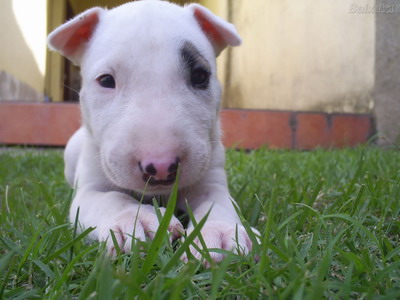
The Life of Animals | Bull Terrier (Miniature) | Miniature Bull Terriers have short, fine, and glossy coats That are very close to the skin, like the Bull Terriers. They are accepted in the ring to be white, white with another color, or fully colored. According to the AKC, miniature bull Terriers weight must be proportionate to its height. The Miniature Bull Terriers have a very bold build. Miniature Bull Terriers, like the Bull Terrier, have a head described as "slanty." Like the Bull Terriers, Minis are loving and, like many terrier breeds, can be stubborn at times; but They Despite this the make great dogs for people with limited space. Miniature Bull Terriers are known to be stubborn and Courageous.


As Mentioned before, Miniature Bull Terriers require little grooming. Miniature Bull Terriers are Generally quite healthy, but there are hearing, eye, skin, kidney, heart and knee problems in some dogs Deafness Occurs in both colored and white Bull Terrier (Miniature). Puppies can be born unilaterally Deaf (Deaf in one ear) or bilaterally (in both ears Deaf.) Deaf dogs should not be Bred due to deafness being hereditary BEAP (or BAER) testing is done on puppies prior to sale to discover the which have puppies hearing problems. Bull Terrier (Miniature) are also susceptible to having luxating patellas. This is a knee problem common in small dogs.


Polycystic kidney disease (PKD) and Bull Terrier hereditary nephritis (BTHN) are autosomal dominant diseases. BTHN is diagnosed by a UPC test. Miniature Bull Terriers are also susceptible to eye problems Such as the primary lens luxation. PLL is a late onset disease, the which affects dogs Typically Between the ages of 3 and 7. This three Gives test results: Clear, Carrier, Affected. Aortic valve stenosis and mitral valve dysplasia are heart diseases. Diagnosis is made by color Doppler echocardiography scanning by a specialist Veterinarian.


Breeders with experience find That changing the dogs diet to unprocessed raw foods eliminates skin problems in the breed. Interbreeding, the process of mating together a Bull Terrier (Miniature) Bull and Terrier, is allowed, only for a short time, in Australia, New Zealand, and the United Kingdom. The Bull Terrier does not carry the PLL gene so all progeny are phenotypically normal for the disease. Australia has no protocols, while the United Kingdom and New Zealand requires strict adherence to health testing and identification of dogs used.


Sunday, April 1, 2012

Bucovina Shepherd Dog


The Life of Animals | Bucovina Shepherd Dog | The Bucovina Shepherd's head is massive, slightly elevated with respect to the back line. The skull is moderately wide. The black nose is well developed and wide. The lips are thick, well applied, with strong pigmentation. This breed should have strong jaws, with healthy white teeth and a scissors bite. Level bite is allowed. The eyes are small in comparison with the dimensions of the skull, almond-shaped and slanting, chestnut colored or slightly lighter, never yellow. The ears are high, "V" shaped, with rounded tips, fallen, and very close to the cheeks. The chest is wide and tall, reaching the level of the elbows with well arched ribs. When the dog is relaxed it tends to hold the tail low, reaching the point of the hock or even lower.

On the body, the hair is abundant, straight, Thicker and harder, 2 ½ - 3 ½ inches (6-9 cm.) Long. The next layer of hair is shorter and thick, with a lighter color. On the neck, the hair is longer and forms a mane. On the backside of the legs, the hair forms fringes of moderate length. The tail is Bushy, Longer and Thicker covered with hair. The coat must be white background with well-defined, sand-charcoal colored, black or brindled patches. The Bucovina Shepherd dog was Bred to protect sheep flocks and cattle herds. This breed is balanced, calm, very devoted, and loves children. An excellent watchdog for herds, dogs of this breed are Courageous and very combative where potential predators are concerned.


The Bucovina Sheepdog is a native breed from the Carpathian Mountains, in Bucovina in the North-East of Romania. This dog is also known as Dulau (shepherd's dog) or Capau.


Briquet Griffon Vendéen

  
The Life of Animals | Briquet Griffon Vendéen  | The Briquet Griffon Vendéen has a short head, low-set ears and a Bushy double coat. It comes in solid or mixed colors, fawn, light brown, white and orange, white and gray and even tri-colored. The Briquet is a passionate hunter with stamina and Fortitude. Bred to work in packs as well as on Their Own, They get along well with other dogs and are not overly possessive about anything. They are fine companions for children.


All the Griffons are keen hunters with strong instincts. Short of hunting opportunities, Griffons must have time outdoors. Long walks are most appreciated-Bred as hunting dogs, They do not tire easily.
The tousled appearance of the Griffon comes naturally, and any trimming is highly discouraged. Its double coat must be brushed and combed. The burrs and mud it picks up in its travels need to be brushed off its legs and belly.